The “1600 PANDAS” project is a result of the collaborative efforts between the WWF (World Wildlife Fund) of France and French artist Paulo Grangeon. The project began in 2008 and consisted of 1600 papier-mâché pandas, which were all handcrafted by Grangeon himself. The pandas were all made with recycled materials and the number represented the number of existing pandas left in the wild.
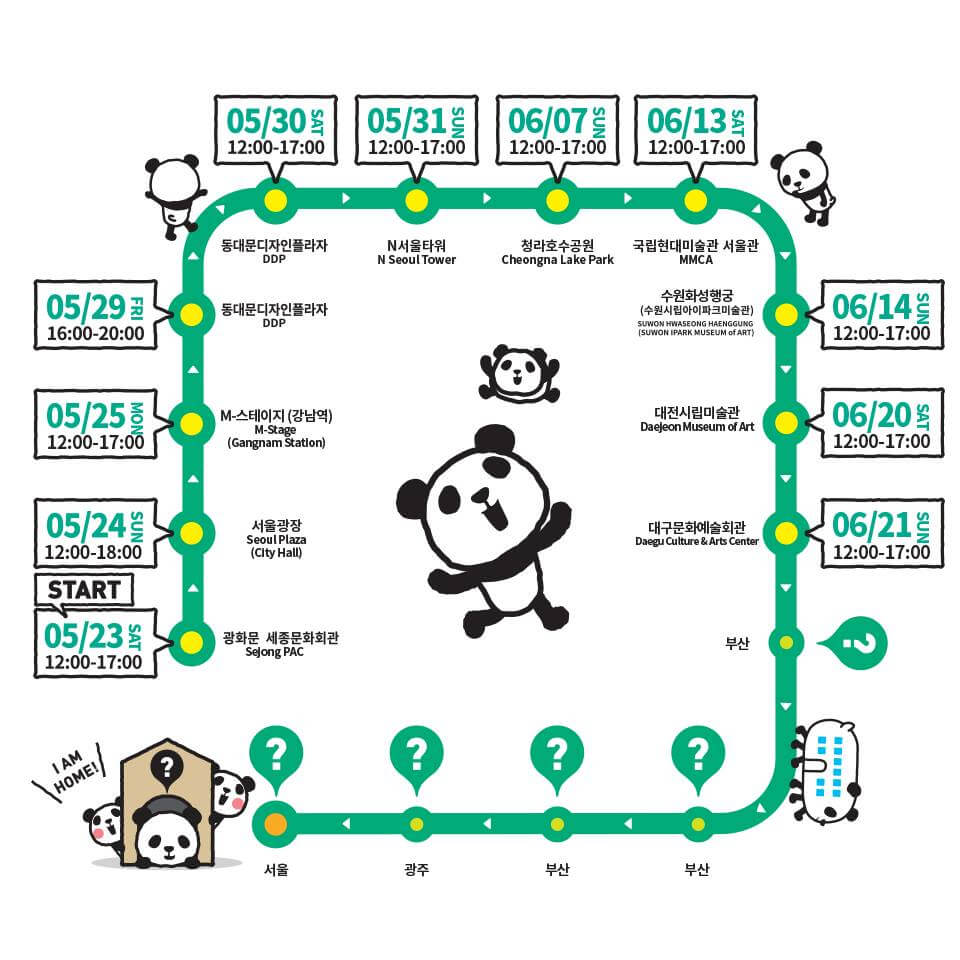
The continuation of this project with the title “1600 PANDAS+” not only refers to the increase in the panda population to over 1,800 in the past decade, but also to the increase of public awareness of wildlife conservation. After nearly 100 exhibitions around the world, the pandas landed in Korea for the first time on May 23rd and will be touring to 7 lucky cities across the country.
The pandas are displayed in various public spaces and are constantly on the move. They usually remain in one spot for one day and are only on display for a few hours, typically between 12:00 and 5:00pm. I have been lucky enough to catch them twice… so far. Last Friday (June 29th) I was able to see them at the DDP (Dongdaemun Design Plaza). I had gone at noon with my boyfriend, but sadly they had changed the time to 3:00. Luckily, I was able to scurry on over after I finished recording at the radio station.
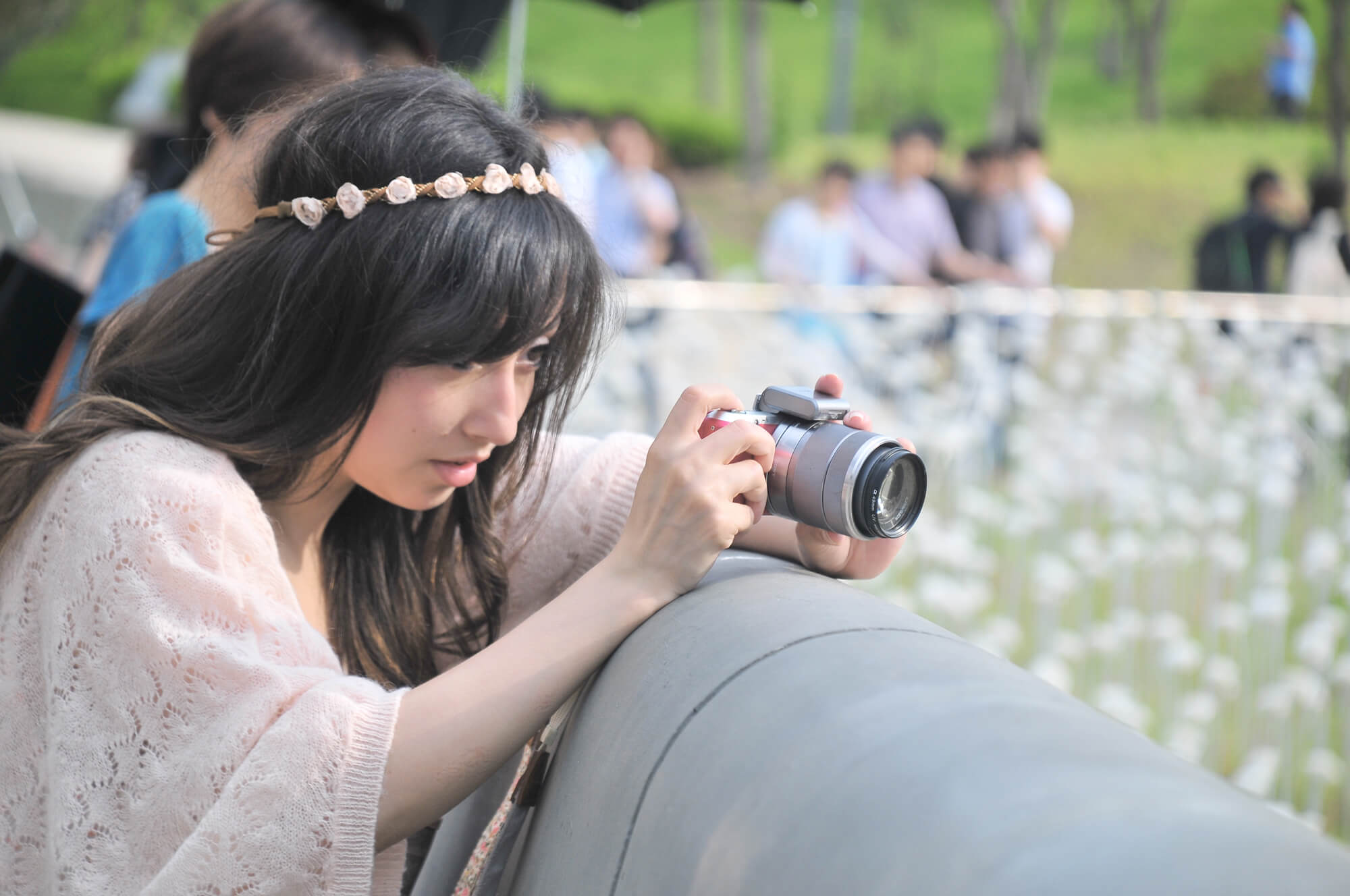
Since people hadn’t quite gotten off work yet, the crowd mostly consisted of photographers and college students with a few moms and their young kids in the mix. For this kind of exhibit, it was relatively well controlled and most people were pretty patient and considerate when someone was trying to take a picture. Some photographers even took pictures of me taking pictures of the pandas, which was amusing. One was nice enough to send me the photos he took of me.
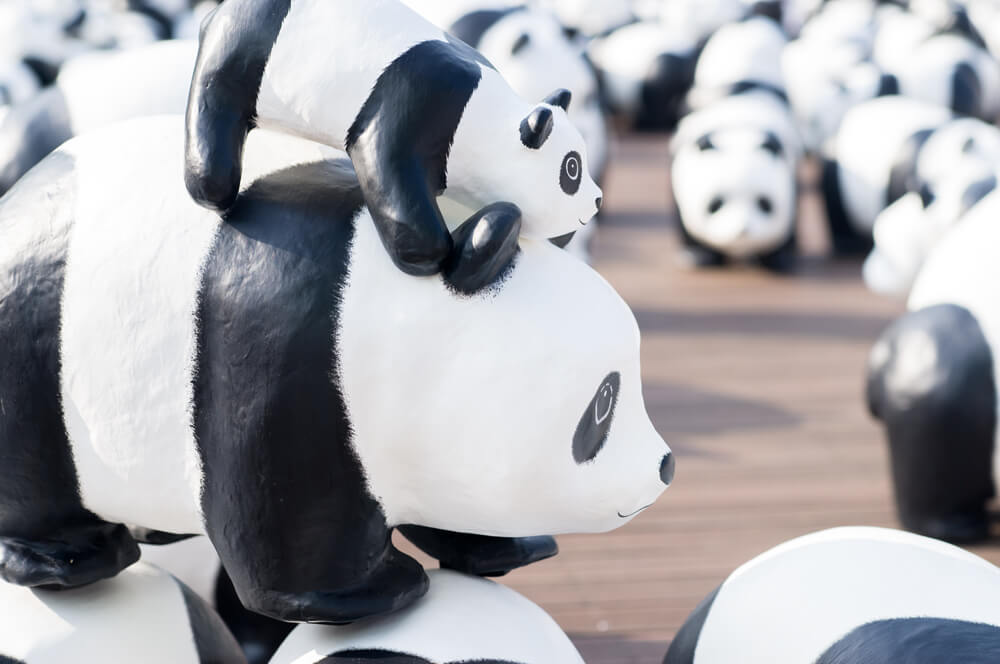
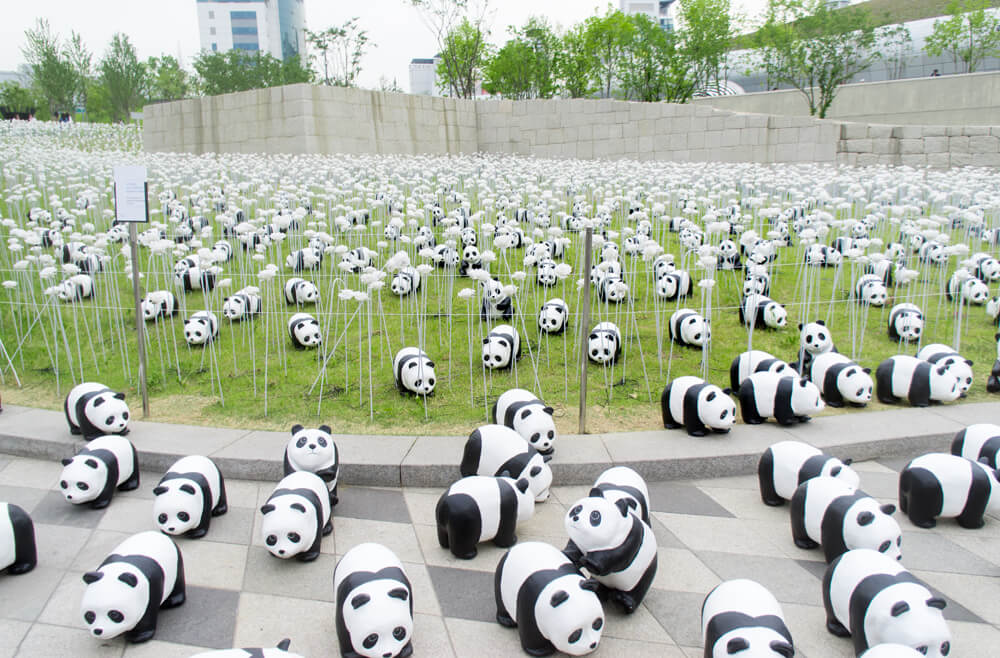
The display itself was not only really cool, but super cute as well! The pandas flooded the stairs, spilling over into a field of LED flowers. Although it looked like a massive panda explosion, they were all placed very strategically and photogenically. You could see little panda powwows, pyramids and conga lines. There was even a panda in a tree. It was obvious that time and effort had been put into placing these pandas just right for our viewing pleasure.
The second location I went to was N Seoul Tower on Sunday (May 31st). At first I was a bit disappointed to learn that the space was too small to hold all the pandas. As a result, they could only display 400 pandas. However on the up side they brought out the “mom and cub” pandas out for the first time! These were specially created to commemorate the growth of the wild giant panda population since the start of the project in 2008. While you are not allowed to touch the pandas, a select few (particularly children) are given the opportunity to hold a panda cub and take pictures with it. I was over the moon when I got an opportunity to take a picture with one. It was so cute and I was probably way more excited than the kids around me.
All in all, this world tour project is an adorable and whimsical sight to see. What’s more is that it’s for a great cause and has successfully helped spread awareness about conserving and protecting our environment and wildlife. If you have a chance, you should definitely check it out… especially if it’s in your area! This Sunday, June 7th the pandas will be on display at 청라호수공원 (Cheongna Lake Park) from 12 to 5pm. Hope to see you there!
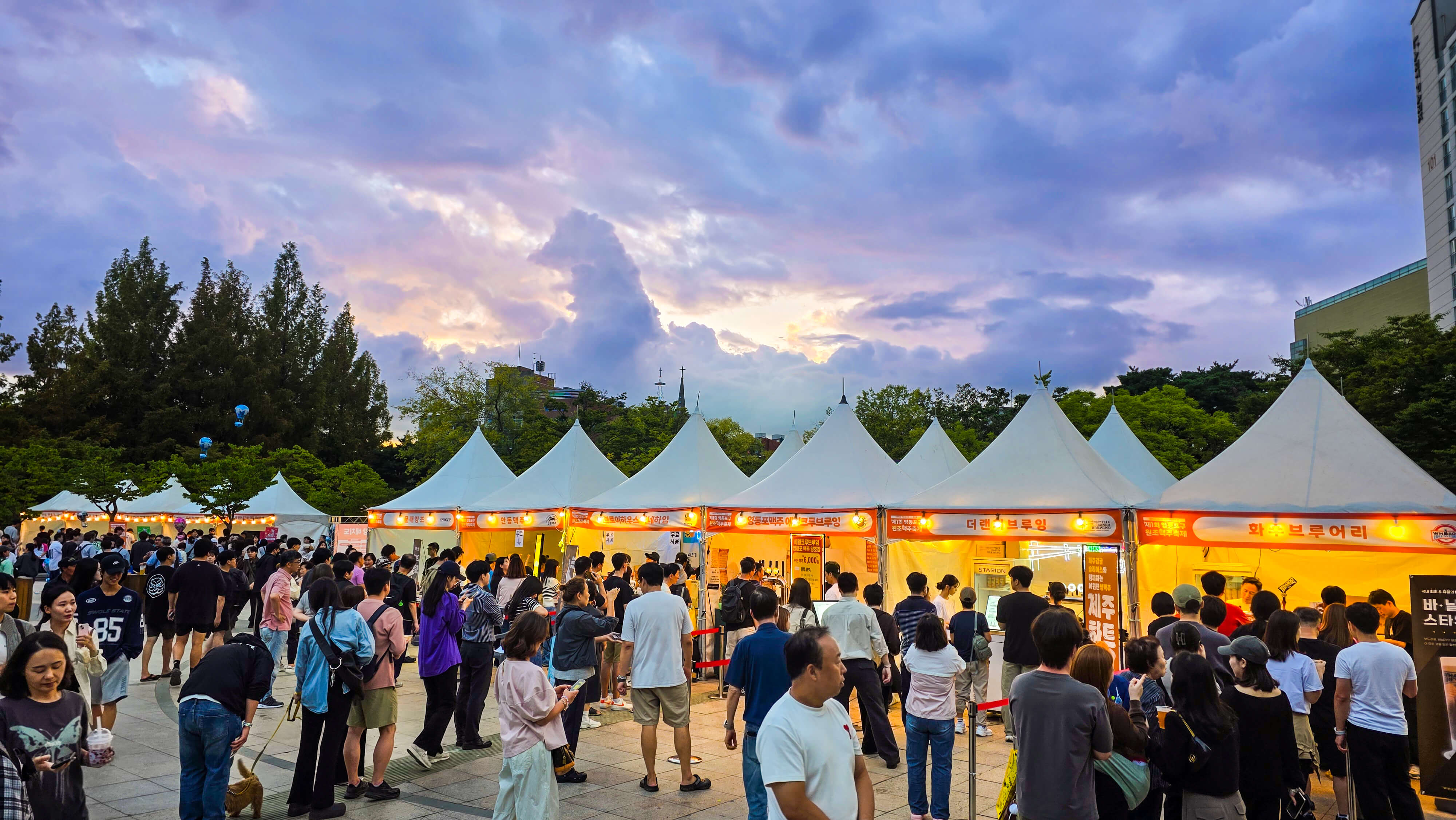
Beer first flowed into Korea during the Japanese occupation. In the early 1930s, Japanese companies established breweries here, mainly to supply beer to settlers and officials. At the time, beer was seen as an upscale, imported-style drink, pretty much reserved for the elite or special occasions. By 1933, Yeongdeungpo became home to two of Korea’s major breweries, which later evolved into OB (Oriental Brewery) and Hite Brewery.





Omg I wish I’d known about this earlier, it’s such a cute idea!! ❤🐼❤