Hyangiram Hermitage (or Geomosan Hyangilam) is a Buddhist temple nestled high in the mountains overlooking the East Sea. To make it up to the peak, visitors must walk up hundreds of steps, across trails cut into the stone mountain face and under thousand year-old boulders. But it’s worth it to see one of the most beautiful temples in South Korea.

Up, Up, and Away
We arrived in late-autumn when the trees held some color and tourist season was nearing it’s end. The drive in was only 30 minutes from Yeosu, but finding parking was a challenge. The streets were bumper-to-bumper with hopeful visitors and our wait seemed hopeless until a local business owner opened her parking lot to the waiting masses.
From there, we started a short trek up a steep hill that led us past restaurants and shops all on their way to the entrance of the temple. One thing we love about mountain temples like this is the smell of delicious food that accompanies your travels thanks to all the restaurants that crowd the entrance. But, knowing that a hike up a mountain awaited us, we made the smart decision to eat on our way down rather than up.


Once we paid our admission fee (2,000 KRW), we were greeted by the steep steps leading to Iljumun Gate. There’s an easier path that winds around the steps, but we’d recommend taking that path down. The steps lead right up to the main gate of the temple which is worth seeing on your way into the temple.


The later paths wind up the mountain and through narrow passages. Kids might have an easier time, but we had to shuffle sideways through crevasses while trying not to scrape our clothes across the rockface. Legends say that visitors who make their way through the 7 caves and passages on their way up to the mountain will have their wish granted. Which just makes everything a bit more magical.
A Symphony of Color
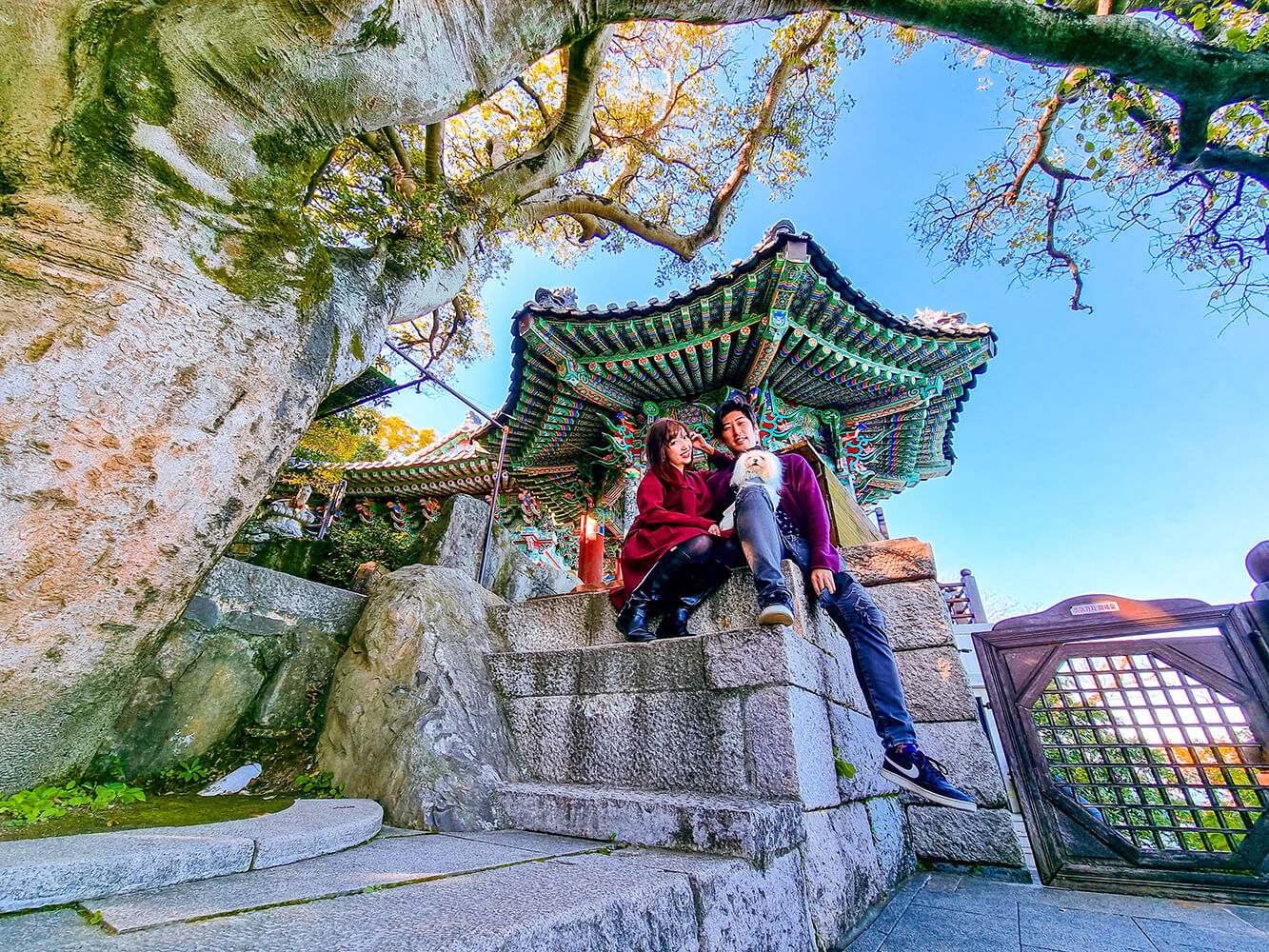
Once we reached the main part of the temple, we stopped for a bit to catch our breath. The hike isn’t difficult, but we were carrying little Uyu in his doggy bag which made it a little harder. When we visited, there were small groups of families and friends catching their breath before moving on to their final destination.


The temple’s main hall juts out over a steep drop down in trees and bushes overlooking the ocean miles in the distance. The trees are impossibly green and it’s hard not to appreciate the smell of the ocean through the forest.
We wound our way up the rest of the trail to find the final structure of Hyangiram Hermitage. There we purchased a small golden leaf where you can write your wish and hang it somewhere on the mountain. We took our time, enjoyed the view and slowly started our trek back down, leaf in hand. The leaves are part of the temple’s charm and you see them everywhere on your way up (and down) the mountain. We waited until we found a lamp post that wasn’t completely overwhelmed with wishes to deposit our own.


The Way Down
Our final activity before leaving the temple was to eat a late lunch. It was already late afternoon, so many of the restaurants were closed. We lucked-out, however, and got a table overlooking the sea at Eolshigu (얼씨구).
It felt a little wrong to be eating seafood pancake without makgeolli, but a side of seafood kalguksu certainly helped wash it all down. It was quiet and the sun was slowly making it’s way down by the time we finished. Most of the visitors joined us in our trek down the mountain, leaving the quiet emerald forest and gold leaves behind.


Where is Hyangiram Hermitage?
Hyangiram Hermitage is located in the Jeollanam-do provice in Yeosu. It isn’t easily accessible by public transportation, so we recommend driving there directly. There are plenty of restaurants in the area that you can visit for a delicious meal, too.
Discover more from Seoul Searching
Subscribe to get the latest posts sent to your email.