Dazaifu is a small, quiet city on the outskirts of Fukuoka, that’s absolutely perfect for a day trip. Just a 30-minute train ride from Fukuoka (if you plan your train transfers right), Dazaifu is a charming old town that served as Kyushu’s political and diplomatic hub back in the day and I simply had to see it for myself.

Dazaifu Tenmangu Shrine
There are plenty of shrines, temples and museums in the area, but the real drawing point here is Dazaifu Tenmangu Shrine. Dedicated to and built over the grave of Sugawara no Michizane, a Heian-era scholar and poet who later became deified as Tenjin, the god of learning, this shrine draws in waves of students who come to pray for good grades and exam success. And I saw plenty of students doing just that, though this ritual is most popular in the spring.


Visiting Dazaifu Tenmangu Shrine in summer is a whole different kind of experience. Vibrant, hot, humid but still buzzing with energy. The approach to the shrine was packed with families, students on summer break, and travelers trying to survive the heat with small fans and umbrellas. The summer heat in Kyushu is no joke, so the shady pathways lined with tall trees and the ponds around the shrine were a welcome relief as I wandered through the grounds.


I’d say the best part of visiting in the summer are the wind chimes. The wind chimes at Dazaifu Tenmangu are one of the shrine’s most magical summer touches. Starting in July and continuing through August, parts of the shrine are decorated with hundreds of colorful glass chimes that tinkle softly in the breeze. Each chime is hand-painted with delicate summer motifs, like goldfish, morning glories, fireworks, or cool blue waves. When the wind blows, the sound is light and refreshing, almost like a musical reminder that summer heat can be softened by something simple and beautiful.


Visitors can also write their wishes on small strips of paper (tanzaku) and attach them to the chimes, so as they sway and ring, it feels like your hopes are drifting into the air. Walking through the sea of shimmering glass and gentle sound feels like stepping into a dreamlike summer scene straight out of an anime. Paired with the shrine’s traditional architecture, ponds, and lush greenery, the wind chimes turn Dazaifu Tenmangu into a living summer art installation that makes the trip there in August totally worth it.


Beyond the academic prayers and wind chimes, the shrine is just gorgeous to wander through. You’ll cross the iconic arched bridge over a koi-filled pond (I saw turtles), stroll past vermilion gates, get lost in a very Ghibli-esque forest and maybe stumble upon a food stall or two. You can even buy all kinds of charms for health, good luck, wealth you name it. I bought a mint colored daruma. These dolls are used to make wishes about a goal you’d like to achieve. You paint the left eye on the doll and make a wish. After it comes true, you paint the right eye.


There are the smaller charms too like rubbing the head of the bronze ox statues scattered around (they’re believed to bring good luck, especially for students). And of course, there’s the shopping street leading up to the shrine that is full of delicious street food and handmade trinkets.
Monzenmachi Eats
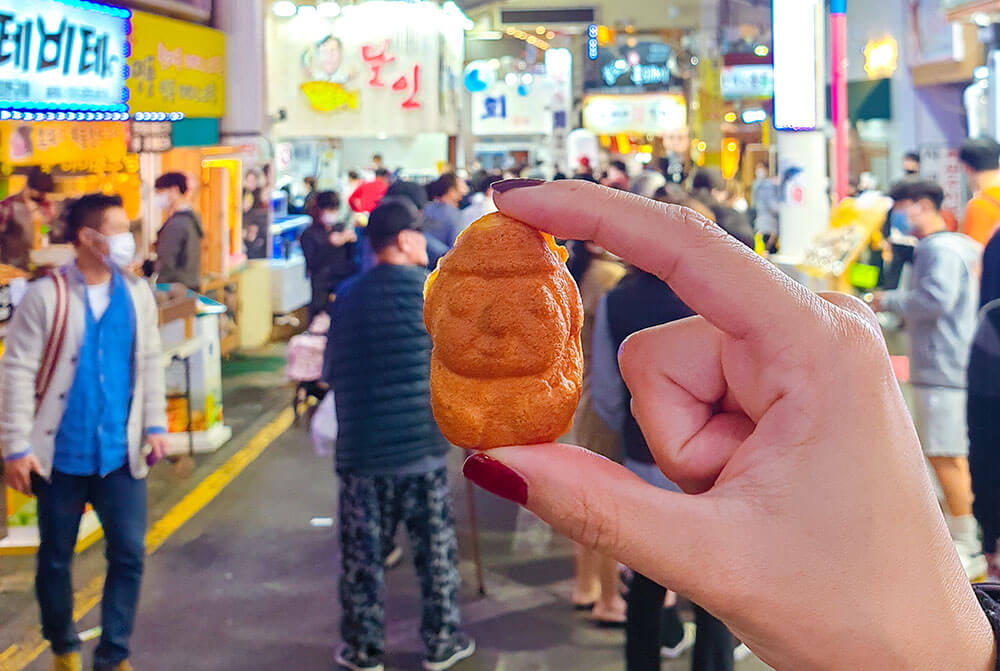
Monzenmachi is the lively shopping street that leads right up to Dazaifu Tenmangu Shrine, and honestly, it’s half the fun of visiting. The moment you step onto this bustling path, you’re greeted with rows of charming shops, cafés, and stalls selling everything from local street food to quirky souvenirs. The star of the street is definitely Umegae Mochi, crispy grilled rice cakes stuffed with sweet red bean paste that you’ll see being pressed fresh on hot iron molds right in front of you. They’re warm, toasty, and the ultimate shrine snack.


While most people come for Umegae Mochi, the street has also embraced more modern and hearty snacks, and their Gokaku Kakuni Buns are definitely a standout. Imagine a pillowy-soft, freshly steamed bao bun stuffed with thick slices of juicy, slow-braised pork belly that’s been simmered until tender and glazed in a sweet-savory soy-based sauce. The pork practically melts in your mouth, and the bun soaks up all that rich flavor while staying fluffy.


There are also seasonal items, one of the most popular being the Real Strawberry Smoothies. They’re made with fresh, local strawberries (Fukuoka is famous for its super-sweet Amaou variety), blended into an icy, refreshing drink that tastes like pure fruit rather than something sugary or artificial. The one I got also came topped with a creamy soft serve. It’s the kind of drink that feels indulgent yet refreshing, and honestly, once you try one, you’ll wonder why strawberries don’t always taste that good back home.


The most surprising snack for me was the Yakimochi (grilled rice cake skewers). These chewy rice cakes are shaped into bite-sized pieces, skewered, and then grilled over open flames until they get that slightly crisp, golden-brown outside while staying soft and sticky inside. As they’re cooking, they’re brushed with a sweet soy glaze that caramelizes beautifully. The result is warm, toasty, and just the right mix of chewy and smoky. I got mine topped with dollops of yuzu pepper mayo and it was literally the most delicious thing I had on that street. You can only get it in Kyushu, so I highly recommend not missing out.


Of course I can’t go anywhere in Japan without having a local cup of matcha. Though there was a vary eyecatching Starbucks on the street, I opted for a smaller local cafe that served the most delicious matcha coffee latte I’ve ever had. While I do love a good matcha, I’m a coffee girl so instead of choosing between coffee and green tea, I got the best of both in one cup, layers of earthy, slightly bitter matcha paired with the rich, roasted notes of espresso, lightly sweetened and all smoothed out with creamy milk. What’s fun is that this drink really reflects Dazaifu’s vibe: deeply traditional with its matcha roots, yet playful and contemporary thanks to the coffee culture that’s taken hold.


Monzenmachi Buys
Monzenmachi is the perfect place to wander slowly, snack as you go, and maybe pick up a few keepsakes. We always pick up a small trinket to put on our bookshelf when we travel. Last time I was in Japan I got the cutest pair of stone shisa from Okinawa and this time I got a Kiuso. Kiuso are small, hand-carved wooden figures depicting a bullfinch perched on a branch. These birds are considered messengers of Sugawara no Michizane, the Tenjin for whom Dazaifu Tenmangu Shrine is dedicated. Each one is handmade and they come in all sizes, so I thought it would be the perfect piece of Dazaifu to take home with me.


If that’s not your vibe, there are plenty of other things like Tenjin-themed charms, calligraphy goods like beautiful brushes, ink, and notebooks (a nod to the god of learning), or locally made ceramics and stained glass light catchers. For the foodie I recommend jams, teas, pickled plums or local matcha to bring a taste of Dazaifu home.


Between the history, the atmosphere, and the food, visiting Dazaifu Tenmangu feels like stepping into a slice of living tradition, with just the right amount of fun and flavor sprinkled in.
Discover more from Seoul Searching
Subscribe to get the latest posts sent to your email.